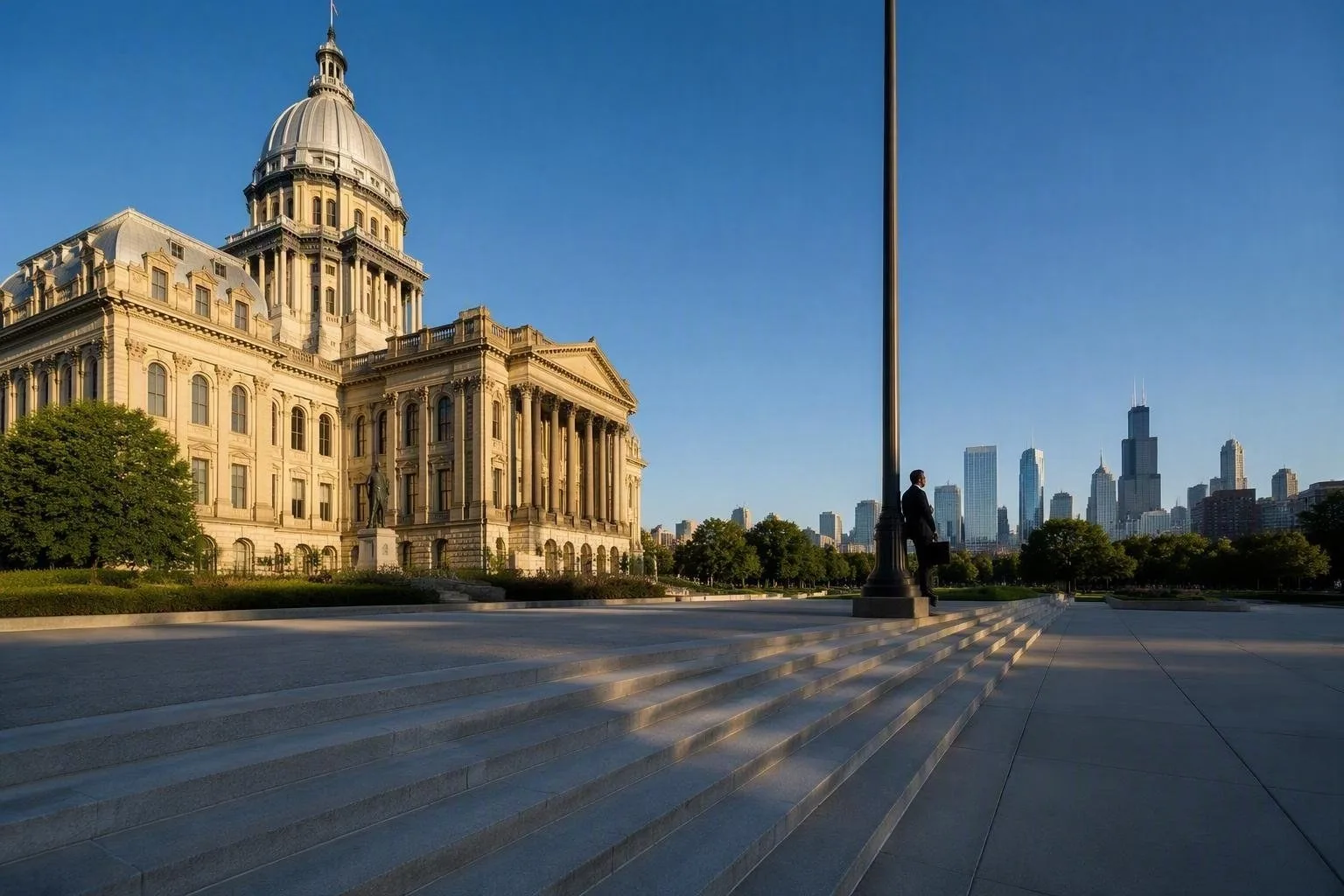

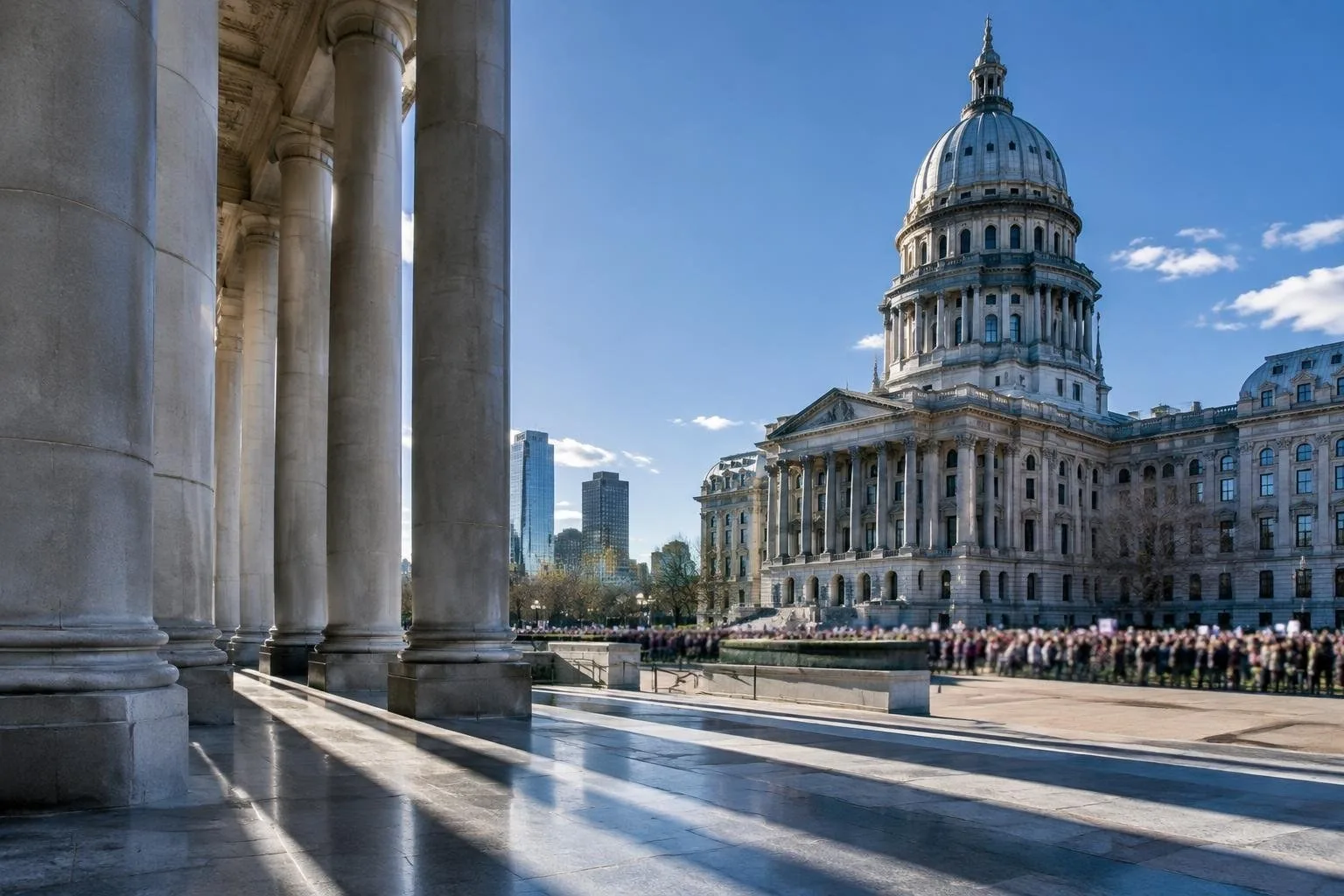
On Wednesday, a crowd of roughly a thousand people arrived in Springfield by bus, car and Amtrak to press the state Capitol for stronger oversight of data centers. Organized by local community leaders and environmental groups, the gathering voiced frustration that Illinois residents have been fighting for basic protections without sufficient legislative support.
Speakers highlighted the POWER Act, a proposed roughly 1,000-page bill that would obligate data-center operators to cover the energy they consume, disclose water usage, limit noise and diesel-generator emissions, and negotiate community-benefit agreements. The act also calls for transparent reporting and prohibits nondisclosure agreements that hide environmental impacts.
Rally at the Capitol calls for data-center oversight
Lori McKiernan, a Springfield community organizer and member of the Sierra Club, told the assembly, “Illinoisans are tired of fighting alone for basic protections without help from the state legislature. Time is up. Our legislators must take action on data centers.” The crowd responded with chants and applause, underscoring the sense that this issue touches everyday utilities, household bills, and local neighborhoods.
Cate Caldwell of the Illinois Environmental Council added, “Big tech, they’re counting on us to be intimidated by their big money. They’re counting on us to be overwhelmed by the fight in front of us. But as I look at this crowd today, I think big tech should be intimidated by us.”
POWER Act details and legislative timeline
Sen. Ram Villivalam, D-Chicago, the bill’s lead sponsor, described the legislation as the “most comprehensive data center legislation in the nation” and called it a “big solution for a big problem.” He addressed the audience, “You’re here because this matters. When something affects your families, your homes, your neighbors, and of course our bills, your voices deserve to be heard.”
The Senate Energy and Public Utilities Committee scheduled a subject-matter hearing for 4:30 p.m. on Wednesday in Room 212 of the Capitol. While no vote is expected this week, the committee could revisit the measure during the veto session slated for next month, giving advocates a narrow window to secure passage.
Industry pressure and broader energy context
Illinois already hosts numerous data centers that power email, video streaming and other online services. In recent years, tech firms chasing generative artificial intelligence have begun constructing hyperscale data centers: facilities large enough to consume the electricity of a small city. This surge in demand has contributed to rising energy costs for ordinary residents and small businesses.
State reports released shortly before the rally suggested delaying the closure of eleven fossil-fuel plants, required by Illinois’ landmark energy bill, to guarantee enough power for the growing demand. Advocates warned that postponing climate goals to feed data-center expansion would undermine the state’s environmental commitments.
Although negotiations have continued over the summer with labor unions, industry representatives, and environmental groups, the core provisions of the POWER Act remain intact. If enacted, the bill would also require quarterly water-usage reports to the Illinois Commerce Commission and demand water-resource impact assessments conducted by the Illinois State Water Survey.
No formal vote is scheduled this week, but lawmakers may bring the proposal to the floor during the final days of the veto session next month, offering a decisive moment for both supporters and opponents of the measure.